

Sprinter Improper Fuel procedures
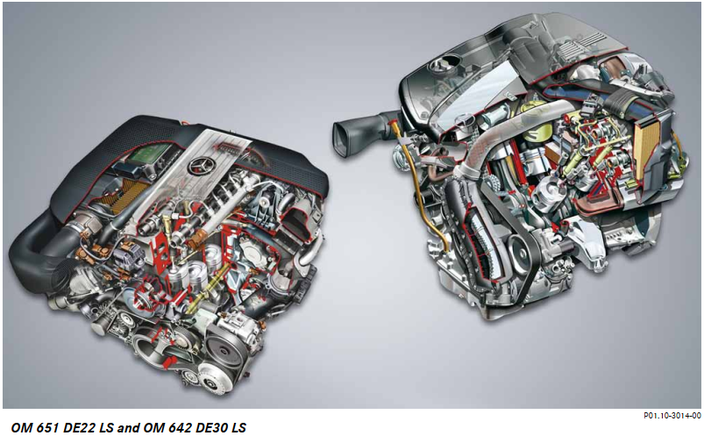
OM612, OM642, OM647 and OM651 diesel engines.
An essential reference for mechanics: detailed component diagrams, injector testing and replacement procedures, cylinder head repair, as well as specifications and tools for working with engines used in Sprinter, Vito, Viano, and other models.
| Password for PDF: truckfixdiagn.com | |
| Mercedes Sprinter 2006–2018 Engine performance OM642 | Download |
| Mercedes OM642 Emission Applications - Diesel | Download |
| Mercedes OM642 Complete Engine | Download |
| Mercedes OM642 Crank Assembly | Download |
| Mercedes OM642 Electrical system | Download |
| Mercedes OM642 Engine Cooling System | Download |
| Mercedes OM642 Engine Lubrication, Engine Oil Cooling | Download |
| Mercedes OM642 Engine Suspension | Download |
| Mercedes OM642 Engine Timing | Download |
| Mercedes OM642.896/.898/.993 Exhaust Manifolds, Emission Control | Download |
| Mercedes OM642 Exhaust System | Download |
| Mercedes OM642 Fuel system | Download |
| Mercedes OM642 Throttle Control, Speed control system | Download |
Common Problems with the OM642 Engine
1. Oil leaks and heat exchanger gaskets.
- Problem: This is perhaps the most common and well-known problem with the OM642. Oil often leaks from under the heat exchanger (oil cooler) gasket, located in the V-shaft of the cylinder block.
- Symptoms: Oil appears in the V-shaft and flows down the rear of the engine, which can cause oil to leak onto the turbocharger and muffler, resulting in a burning smell.
- Cause: Over time, gaskets (often made of cheaper material) wear out due to high temperatures and pressure.
2. Intake manifold flaps.
- Problem: The actuator or the flaps themselves (whirling flaps) in the intake manifold, which regulate airflow for optimal combustion, often fail or become contaminated with soot.
- Symptoms: Loss of power, the engine going into limp mode, and starting system errors.
- Solution: Replace the manifold assembly or install a drive repair kit, and clean the manifold of soot.
3. Turbocharger and its seal.
- Problem: Oil leaking from under the O-ring between the turbocharger housing and the air duct. This is often mistaken for a faulty turbocharger itself.
- Cause: As with the heat exchanger, wear and hardening of the seals due to high temperatures.
- Electronic actuator: In later models, the drive turbo can fail, leading to incorrect boost pressure and surging frequency.
4. Common Rail and injector problems
- Injector seals: While not as critical as in older 4-cylinder CDIs, exhaust gas leakage through the copper washers under the injectors can recur.
- Symptoms: Formation of "coke" or "black carbon" around the injector, making it difficult to remove.
- Fuel Pressure Sensor: A failed fuel rail pressure sensor can cause problems starting or stalling the engine.
5. EGR System and Diesel Particulate Filter (DPF).
- EGR (Exhaust Gas Recirculation) Valve: Clogged or stuck EGR valves with soot are common problems, especially in urban driving, affecting power and causing errors.
- DPF (Diesel Particulate Filter): As with most modern diesel engines, the diesel particulate filter takes time to clog and needs to be cleaned or replaced, especially if the injection system or sensors are faulty.
Write a comment